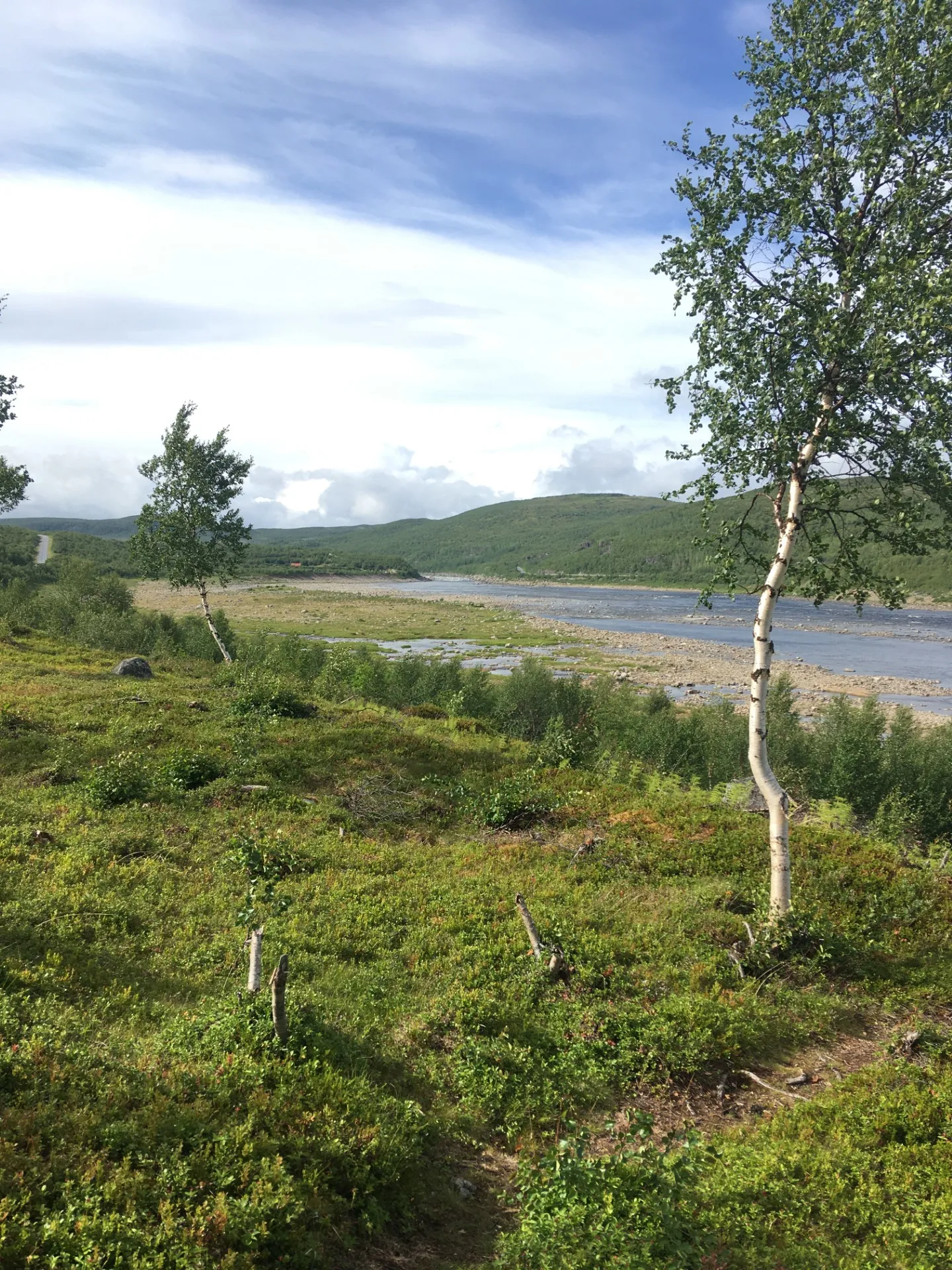
Kaldoaivi (Sevettijärvi–Pulmanki Trail)
Also known as Sevettijärvi–Pulmanki Trail · Kaldoaivin erämaa
The Sevettijärvi–Pulmanki Trail is the main route through Kaldoaivi, Finland's largest wilderness area: a vast, lonely expanse of gentle treeless fells, countless lakes and deep river valleys in the far northeast, home to revived arctic foxes, gyrfalcons and snowy owls. Starting from the Skolt Sámi village of Sevettijärvi, it crosses pine heath in the south and rises to open, windswept fell upland in the north, ending near the Norwegian border at Lake Pulmankijärvi. This is wilderness hiking in the truest sense — few people, no roads, and real self-reliance.
Kaldoaivi is Finland's largest wilderness area — almost 3,000 km² of roadless, remote terrain in the far north, very close to the Norwegian border. There are open wilderness huts along the trail, but you must carry a tent and be ready to be fully self-sufficient. Several water crossings are by wading or hand-operated cable ferry, not always by bridge. Rubber boots are a genuine local recommendation for the wet sections.
Getting to the trailhead
Reach Sevettijärvi in the far north: a daily bus from Rovaniemi toward Inari connects to Sevettijärvi and Näätämö; the nearest airport is Ivalo and the nearest train station Kemijärvi. Local taxi firms also serve the village.
The trail starts at the Skolt Sámi Heritage House in Sevettijärvi (free parking, dry toilet, exhibitions; the nearby Sevetin Baari serves food). The northern end is on the south shore of Lake Pulmankijärvi in Utsjoki.
From the northern end at Pulmankijärvi it's about 20 km by the Pulmankijärventie road to the larger village of Nuorgam. Arrange transport/pickup in advance, as this is remote country with little passing traffic.
Plan by season
Temperature
Cool; fell weather changes fast
Daylight
Midnight sun
Trail condition
Snow usually gone by early June, but that's peak flood season for rivers and streams. Best hiking late June to early October. Mosquitoes mid-June to mid-August, worst in the wetter south; the open, windy middle fells are more bug-free.
What to pack
A remote, self-sufficient trek across roadless wilderness with frequent wet ground and water crossings.
Tent and sleeping bag — huts may be full or occupied; always have a backup
Rubber boots or sturdy waterproof boots for wet mires and fords (locals favour rubber boots here)
Trekking poles for river crossings and balance; spare shoes for wading
Map and compass/GPS — essential across this trackless area
Camp stove and fuel; full food supply (no services on the trail)
Mosquito net and repellent for June–August
Elevation profile — tap a stop
Segment distances from nationalparks.fi (Sevettijärvi–Iisakkijärvi 19, –Huikinvárjohka 9 or 15, –Čárajávri 12, –Čuomasjávri 11, then on to Pulmankijärvi). Total varies 60–70 km by route; cumulative km here are approximate.
Sevettijärvi
Skolt Sámi Heritage House trailhead (parking, dry toilet, café/restaurant nearby). The southern trail runs through pine forest.
Good to know
Water
Many lakes and rivers, so water is plentiful, but boil or filter it before drinking. The area suits recreational fishing (with the proper permits).
Camping
Everyman's right applies in the wilderness area — you may camp with a tent freely, not only by the huts. Conditions can still be challenging (wet mires, fords), so plan stops carefully.
Campfires & toilets
A campfire site at Lake Opukasjärvi and others along the way; fires may be made with due care using dead ground wood when no wildfire warning is in effect.
Waste
No services and no bins anywhere — carry out everything you bring in.
Mobile signal
Mobile coverage is poor and unreliable across this vast roadless wilderness.
Trail markings
Marked with orange-topped wooden poles, but this is a vast roadless wilderness — carry a map and compass and know how to navigate by them.
Huts & shelters
Five open wilderness huts along the trail (Iisakkijärvi, Rousajärvi, Huikinvárjohka, Čárajávri, Čuomasjávri), sleeping ~6–8, first-come-first-served. Also lean-to shelters, two traditional Lapp huts, and four bookable rental cabins (whole-cabin rental, reservable Mar–Oct via Ivalo Customer Service / Siida). Carry a tent as backup.
Emergency & winter
112 works across the EU even with low signal, but help is far away in this remote area. Weather on the fells changes fast and is hard to predict. Tell someone your route and return time, and check water levels before fording.
Segment by segment
Sevettijärvi → Iisakkijärvi
19 kmFrom the Skolt Sámi Heritage House the trail heads north through pine heath forest, past Lake Opukasjärvi with its campfire site and lean-to shelter (river bridges on the lake's west side), to the Iisakkijärvi open wilderness hut.
Iisakkijärvi → Huikinvárjohka
9 km (or 15 km via Rousajärvi)A short direct leg to Huikinvárjohka, or a longer alternative via the Rousajärvi hut. The forest thins and the terrain becomes more rugged, open fell upland with mountain birch.
Huikinvárjohka → Čárajávri
12 kmAcross opening fell country to the Čárajávri hut. Just beyond, the trail passes through a gate in the reindeer fence between the Kaldoaivi and Näätämö herding cooperatives onto treeless fell tops; Golmmesoaivi (379 m) here is a Finland–Norway border mark.
Čárajávri → Čuomasjávri
11 kmOnward across high, open ground to Čuomasjávri, the last wilderness hut, with Čuomasvárri fell (435 m) rising behind it — a short climb gives a wide view over the wilderness into Norway.
Čuomasjávri → Pulmankijärvi
~14 kmThe trail runs along the Finnish–Norwegian border toward its northern end at the south shore of Lake Pulmankijärvi, crossing the River Pulmankijoki by bridge near the finish. From here it's about 20 km by road to Nuorgam.