Halti
Also known as Kilpisjärvi–Halti · Arctic Trail / Nordkalott Trail (Finnish leg)
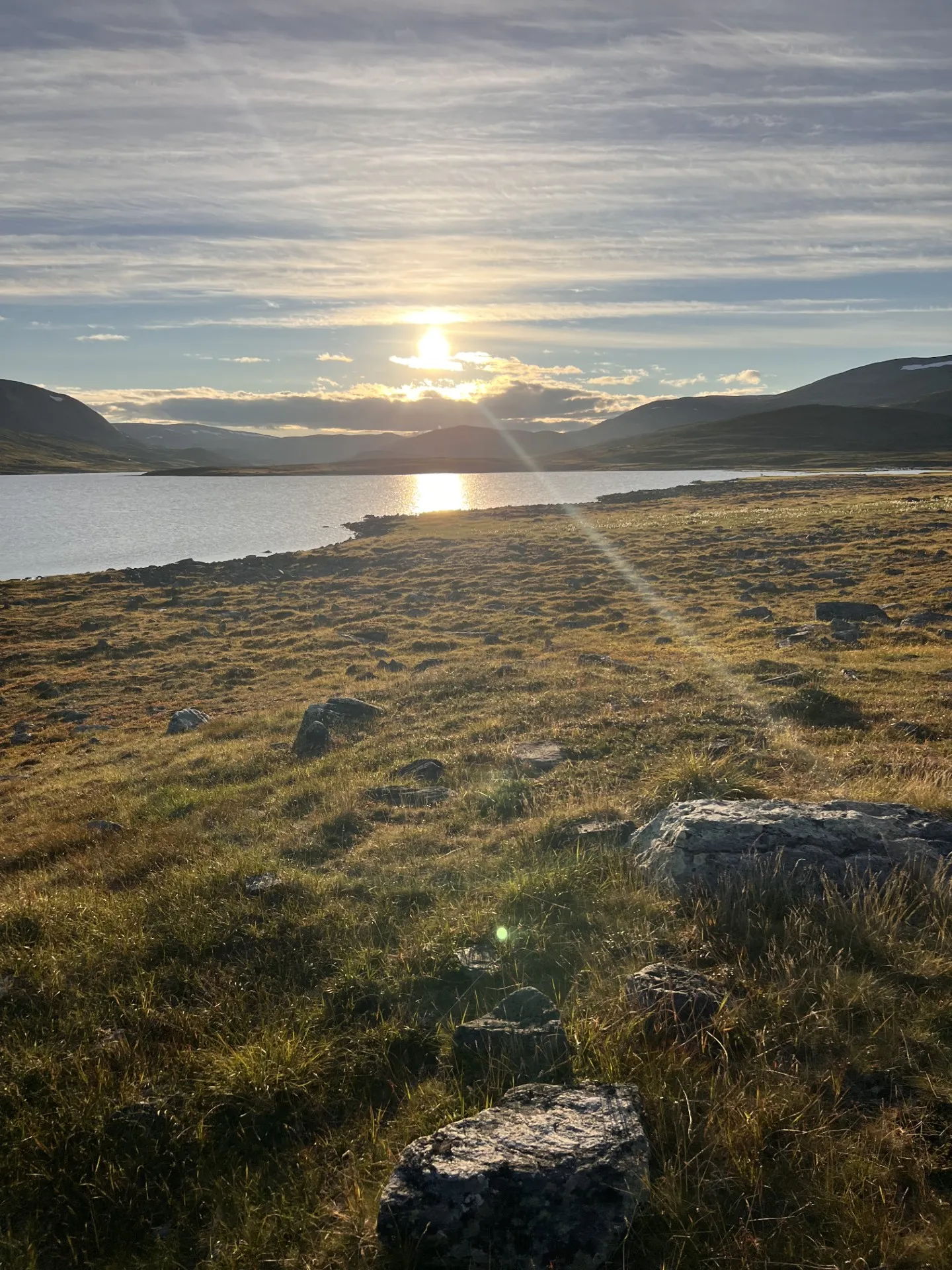
Halti, 1324 m, is the highest point in Finland, a broad, rounded fell rather than a dramatic alpine peak, far out in the northwestern 'arm' of Lapland where Finland, Sweden and Norway nearly meet. The classic Finnish approach is a ~55 km trek from Kilpisjärvi along the Arctic (Nordkalott) Trail through the Käsivarsi Wilderness, hut to hut across open tundra, past clear rivers and the thundering Pitsusköngäs — one of Finland's biggest waterfalls — before the final climb to the border cairn. Its challenge is remoteness and self-reliance, not altitude.
This is a serious multi-day wilderness trek with river crossings and no resupply — solid backcountry skills are required, not just fitness. The route crosses into Norway and back. Above the treeline the weather can shift fast and drop near freezing even in July.
Getting to the trailhead
Get to Kilpisjärvi, a village on the E8 in Finland's far northwest. Daily summer buses run from Rovaniemi (about 6 h, with its international airport) and from Tromsø in Norway (about 3.5 h); you can also drive.
The trail starts at the Kilpisjärvi Visitor Centre / nature centre at the southern end of the village — the trailhead is at the northeast corner of the car park. This is also where you collect keys for any reservable huts you've booked, and fishing permits if you want them.
The route is out-and-back on the same path (Kilpisjärvi ↔ Halti). A much shorter day-hike approach to the summit exists from the Norwegian side (Guolasjávri, ~7 km to the top), but that's a separate trip by car into Norway, not the Finnish wilderness route.
Plan by season
Temperature
Cool; can drop near freezing at altitude even in July
Daylight
Midnight sun
Trail condition
Best early July to mid-September. Before then the ground is often very wet and rivers high with snowmelt, making crossings harder. Mosquitoes ease off toward late summer.
What to pack
A remote tundra trek with no services and several river crossings. You must be fully self-sufficient.
Tent and sleeping bag/pad — huts can be full in peak season and on rainy days
Camp stove and fuel — wood is scarce above the treeline; cooking is also possible in huts
River-crossing shoes (e.g. sandals/Crocs) plus good hiking boots; trekking poles for fords and rocky fells
Windproof, waterproof outerwear and warm spare layers (light down, long underwear, merino, spare socks)
Map and compass/GPS — mobile signal disappears for long stretches
Full food supply for the whole trek; no shops or services en route
Elevation profile — tap a stop
Intermediate km are approximate, reconciled from several sources; one way is about 55 km. Sources vary between ~50–62 km depending on exact start and route — verify against the official Käsivarsi/Arctic Trail map.
Kilpisjärvi
Trailhead at the Kilpisjärvi Visitor Centre (NE corner of the car park). A pleasant first climb to Lake Tsahkaljärvi takes you above the treeline onto open tundra, with Saana fell rising behind you.
Good to know
Water
Huts sit mostly by lakes and rivers, so water is easy to find, but it should be boiled or filtered before drinking. There is no water on the final summit climb — fill up at the Halti hut.
Camping
Camping is allowed along the route (Käsivarsi Wilderness Area), and there are open wilderness huts roughly every 10–20 km. Note the Annjalonji cliffs across Meekonjärvi are a restricted nature reserve — walking there is not allowed.
Campfires & toilets
Fires are allowed but wood is scarce above the treeline (huts have firewood); always check the wildfire warning. A camp stove is essential for cooking.
Waste
No services and no bins — carry out everything you bring in.
Mobile signal
Mobile signal disappears for long stretches (often gone after Kuonjarjoki), sometimes returning on summits like Halti or Saivaara.
Trail markings
Marked in Finland with orange-tipped poles and in Norway with paint on stone cairns. The waymarking is good, but carry a map and compass/GPS for the long remote stretches between markers.
Huts & shelters
Several free open wilderness huts plus reservable huts along the way; keys for reservable huts are collected at the Kilpisjärvi Visitor Centre. Carry a tent anyway — huts can be full in peak season and on rainy days. Huts have firewood, but wood is scarce on the open tundra so bring a stove.
Emergency & winter
112 works across the EU even with low signal, but this is remote terrain far from help. Tell someone your plan and return time, and check river levels before setting off.
Segment by segment
Kilpisjärvi → Saarijärvi
~14 kmA pleasant climb to Lake Tsahkaljärvi quickly brings you above the treeline onto open tundra, with the famous Saana fell rising behind. The trail follows a reindeer fence through fell scenery, makes its first river and stream crossings (some bridged, some not), briefly crosses into Norway and back, and enters the Käsivarsi Wilderness Area at the Saarijärvi hut.
Saarijärvi → Kuonjarjoki
~10 kmFollowing the Finland–Norway border before turning into a river valley between two fells, descending to the Kuonjarjoki hut beneath cliffs that drop vertically some 200 m, with great fallen boulders at their base. Open, flat terrain shows the classic asymmetry of the region's fells.
Kuonjarjoki → Meekonjärvi
~10 kmPast the distinctive squat Saivaara fell to Meekonjärvi, a green valley that feels like an arctic oasis and a soft break after rocky paths. Several huts here; the reservable hut is across the Bierfejohka bridge, where early-summer rapids are a popular photo spot. The Annjalonji cliffs across the lake are a restricted reserve.
Meekonjärvi → Pitsusjärvi
~10 kmBetween the river and the steep slopes of Meekonvaara, through the beautiful Pitsusjoki gorge past Pitsusköngäs, one of Finland's biggest waterfalls, to the Pitsusjärvi huts visible from afar in the open landscape.
Pitsusjärvi → Halti hut → summit
~11 kmOn to the Halti wilderness hut by Lake Háldijávri, the usual base for the summit. The final ~5.5 km climb reaches the summit (1324 m) at border cairn 303B — Finland's highest point, on the Norwegian border. Return is along the same trail back to Kilpisjärvi.